Art history is laden with the struggles of women who refused to be silenced. Artemisia Gentileschi took the trauma of her own life, repression, injustice, and rape, and created art that was not only visceral, but also brutally honest about her inner emotional turmoil. Mary Cassatt was an advocate for women’s suffrage and never married, choosing instead to focus entirely on her artistic career, a path that was largely unheard of at the time. Frida Kahlo took her chronic pain and surgical trauma and used them to create raw, uncompromising self-portraits. Yayoi Kusama brought her hallucinations and internal struggles to life with infinite, immersive spaces. Tracey Emin transforms her bodily battles into a stark, confessional visual diary of expressionism.
These powerhouse women, whom I have come to admire and love through my own battles with pregnancy, self-harm, chronic illness, and mental and physical health struggles, are icons of endurance. They have not only turned physical suffering, trauma, and the challenges of simply being female into art, but through their bravery and stoicism, they have inspired generations of us to do the same: to be vulnerable, resilient, and live authentically. For this reason, I continue to look to these women for strength.
From the Frida Kahlo exhibition at Tate Modern, I quietly meandered into the adjacent Tracey Emin: A Second Life exhibition. The space was curated with such grace that I found it confronting and comforting at the same time. This intensely autobiographical body of work was self-aware and deeply emotive, drawing me in like a siren’s song. It has stayed with me ever since.
I started watching recent talks with Emin on YouTube. Having already read her book Strangeland, I moved on to Tracey Emin from the Tate Artist Series. Then, I came across a line spoken by her in My Heart Is This: Tracey Emin on Painting by Martin Gayford, where she describes how she felt in the moment after creating an elephant out of orange furry fabric at the age of six or seven. The last line has now become my mantra:
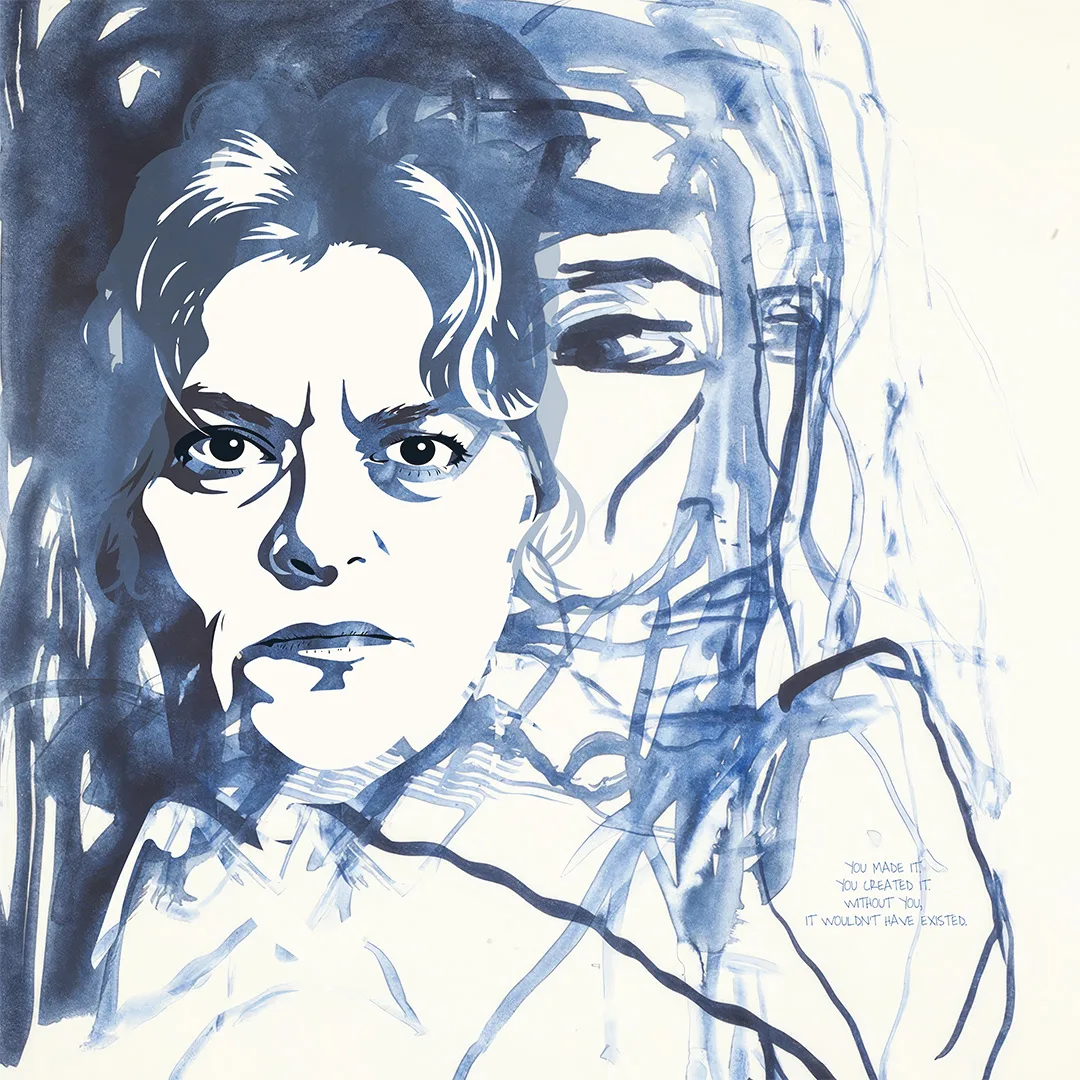
“To me, this thing was amazing. I kept looking at it and I loved it. Because I had made it from the beginning to the end… There was something magical about it. You made it, you created it. Without you, it wouldn’t have existed.”
It was upon reading this book that I knew exactly what my homage portrait would look like. Driven by her words and the Tate’s exhibition, it became clear to me that this portrait needed to convey an emergence from the darkness, a narrative about the triumph of the human spirit.
After The Shadow, a two-colour lithograph from a larger series titled These Feelings Were True, served as the perfect backdrop for my homage portrait. Like the vast majority of Emin’s oeuvre, it is an intensely autobiographical image capturing the raw, unfiltered feelings about her health battles at the time. The entire series captures her psychological state, with Emin noting how the works reflect a sort of “crazy” internal energy tied to her experience:
“This one looks more crazy, and I think it is definitely to do with the cancer I had inside. It is humble too to look at it.”
Emin’s original lithograph deals with the chaotic aftermath of trauma and illness. Placing my clear, resolved portrait emerging from Emin’s blue shadowy wash and fluid background demonstrates her journey of survival in the wake of immense obscurity, one of clarity and reclamation. By using her original image, she emerges from her own ‘shadow’, rather than a shadow I have created.
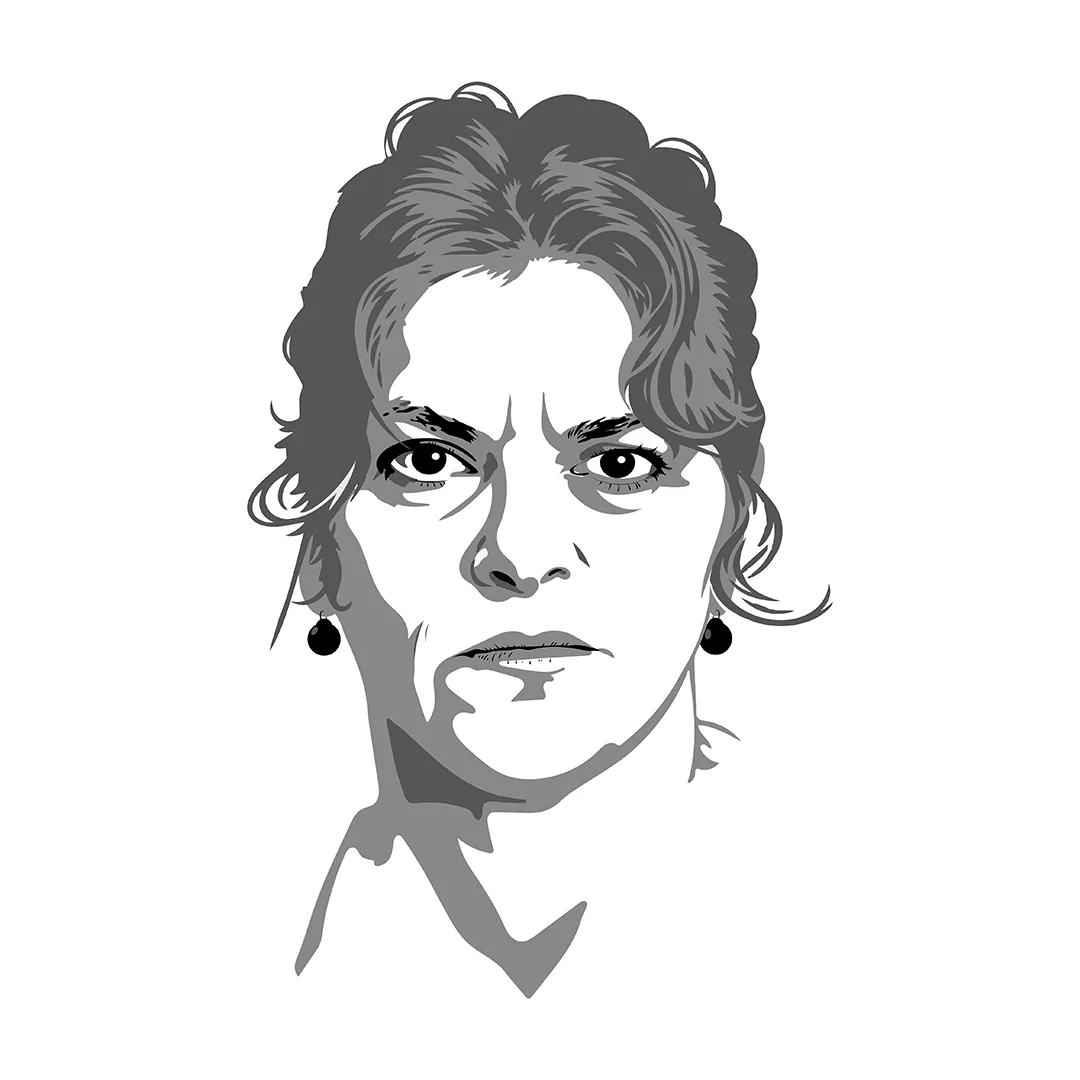
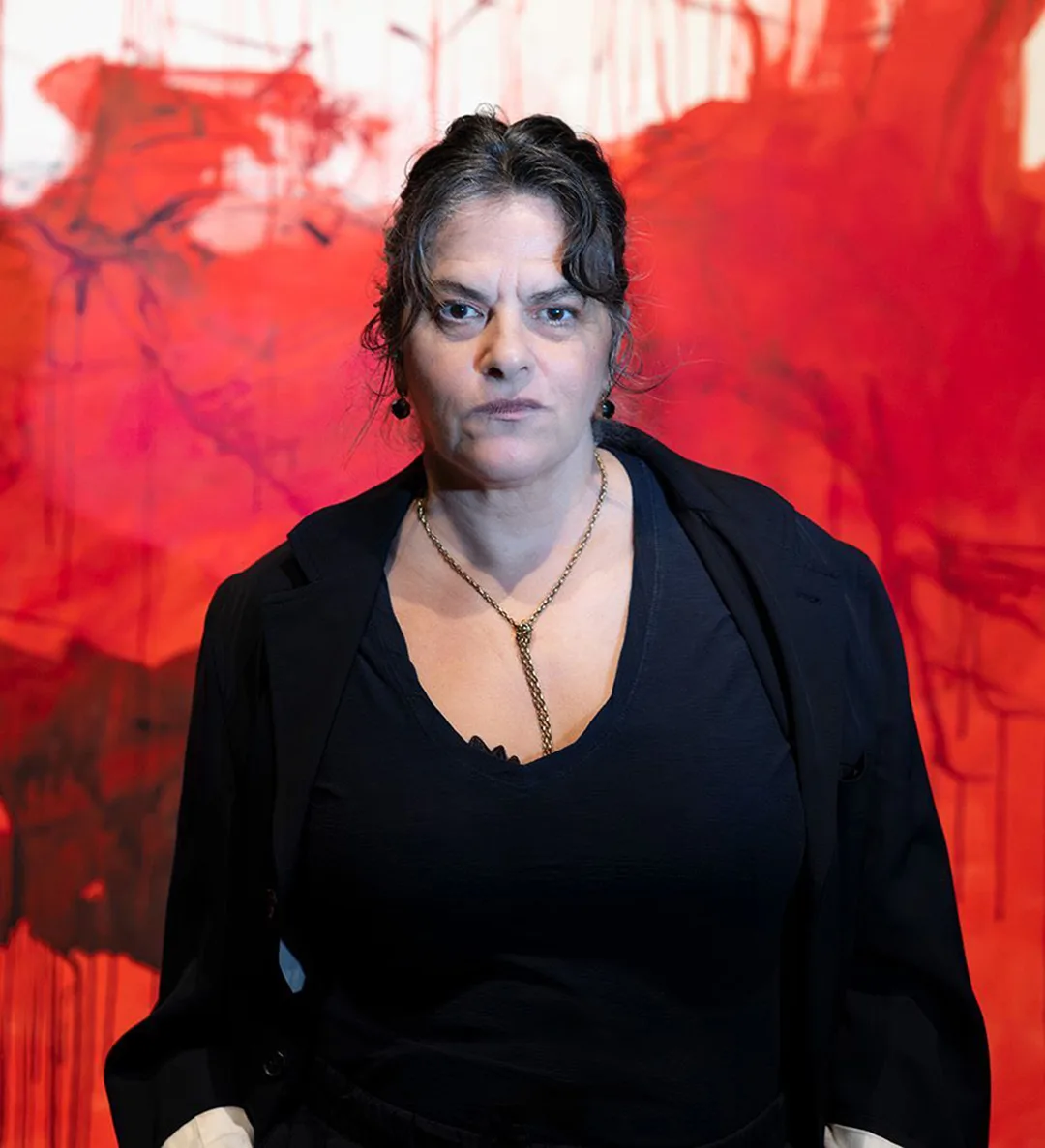
My portrait is a graphic representation based on one of Emin’s most recent press photographs, created after she had already confronted her mortality and survived multiple traumatic surgeries and diagnoses; she is already in emotional recovery, she is healing. That is the spirit I wanted to capture. I stripped away the material elements, the earrings, the suit jacket, to shift the focus onto her spiritual journey: moving from the vulnerable, side-glancing figure in the background to the woman who now looks directly at the viewer with quiet, unwavering strength.
It is the very same direct gaze that I adopted in my homage portraits of Frida Kahlo and Yayoi Kusama, a steadfast reminder that the physical and emotional challenges I endure do not define me. They are the forge of my resilience. Just as Kahlo, Kusama, and Emin before me, I no longer merely survive my struggles; I reclaim them through my art.
All three portraits will be exhibited as part of Expo Metro in Florence, Italy on 28th and 29th November, serving as acknowledgement of vulnerability, strength, and authentic creation.